
There’s something incredibly cozy about digging into a warm, layered dish that hits all those sushi cravings without the fuss of rolling. This Salmon Sushi Bake Recipe brings together tender baked salmon, creamy cheese, and sticky rice in a way that’s as comforting as it is delicious—trust me, you’ll want to make this again and again.

Jump to:
Why You'll Love This Recipe
What I adore about this Salmon Sushi Bake Recipe is how it captures all the flavors of sushi in one easy, family-friendly casserole. It’s perfect when you want sushi vibes but also crave something warm and homey.
- Simplicity meets flavor: No rolling mats or tricky sushi techniques—just layers of tasty goodness.
- Versatile and customizable: You can easily adjust spice levels, toppings, and even switch up the sauce to suit your taste.
- Great for gatherings: It’s easy to make in a big dish and perfect for serving a crowd without stress.
- Satisfies sushi cravings any time: Whether it’s a weeknight dinner or an easy party dish, it always hits the spot.
Ingredients & Why They Work
Each ingredient in this Salmon Sushi Bake Recipe plays a special role to balance flavors and textures. Picking the right kind of salmon and using sticky rice makes all the difference, and a good balance of sauces really amps up the umami.

- Wild sockeye salmon filet: This fish has a rich flavor and firm texture that holds up beautifully with baking.
- Soy sauce: Adds a salty depth to the salmon right from the start.
- Cooked sticky rice: You can buy it ready-made or cook sushi rice carefully—sticky rice is essential for that perfect sushi feel.
- Rice vinegar: Brightens the rice and recreates that characteristic sushi tang.
- Nori sheets: The seaweed layer is key for that authentic flavor and a nice texture contrast.
- Cream cheese: Softened cream cheese lends creaminess and richness, smoothing out the salmon’s boldness.
- Sriracha mayonnaise: I love the spicy kick it gives, balancing the creamy and savory layers.
- Chopped green onions: Fresh oniony bursts add a crisp lift at the end.
- Eel sauce or oyster sauce: A sweet and savory drizzle that finishes the bake with that classic sushi restaurant flavor.
- Furikake rice seasoning: A sprinkle of this adds umami, sesame, and a bit of crunch—love it on top!
- Optional garnishes like radish, cucumber, jalapeño, avocado, and pickled ginger: Fresh garnishes are the secret to take your sushi bake from good to unforgettable.
Make It Your Way
I love playing around with this Salmon Sushi Bake Recipe based on what I have on hand or what my guests prefer. The beauty is you can toggle up the heat, add extra veggies, or swap cream cheese for something lighter—and it all works!
- Spicy Variation: When I’m in the mood for extra heat, I add more sriracha mayo or top with jalapeño slices, and the whole dish gets an addictive kick.
- Vegetarian Twist: Try swapping the salmon for roasted mushrooms or tofu with similar seasonings—you’d be amazed at how satisfying it can be.
- Seasonal Garnishes: I like to switch up fresh topping options with what’s in season—avocado in summer, pickled ginger year-round.
- Lightened Up: For a lighter version, use reduced-fat cream cheese or Greek yogurt, and cut back on sauces slightly.
Step-by-Step: How I Make Salmon Sushi Bake Recipe

Step 1: Prep and Bake the Salmon
I start by preheating the oven to 400°F and lining a large rimmed baking sheet with parchment paper. It’s a small thing but using parchment means easy cleanup, which I appreciate. I place the salmon fillet skin-side down, then drizzle 2 tablespoons of soy sauce over the top to infuse it with savory flavor while baking. Pop it in the oven for about 15 minutes—don’t overcook it, or the salmon will dry out. You want it just cooked through and flaky.
Step 2: Prepare the Sushi Rice Layer
While the salmon’s baking, I get the rice ready. I spray a 9 x 13-inch baking dish with nonstick spray and spoon in about 32 ounces of cooked sticky rice. Drizzle 2 tablespoons of rice vinegar over it, then gently toss the rice by hand to coat each grain—this is what gives it that distinct sushi rice tang. Finally, press the rice firmly and evenly into the bottom of the dish; it helps build the perfect stable base for the next layers.
Step 3: Layer with Nori and Cream Cheese
Next, I lay nori sheets over the rice. Sometimes I cut them with scissors so they fit perfectly across the dish without overlapping too much. Then, I gently spread softened cream cheese over the nori with a flat frosting spatula—this creamy layer is so important to balance the savory salmon topping and bring all the textures together.
Step 4: Mix Salmon with Sriracha Mayo and Spread
Once the salmon’s cooled a bit, I remove the skin and crumble it into a mixing bowl. Then I add about half a cup of sriracha mayonnaise, stirring until everything’s evenly combined. This spicy, creamy salmon mixture is spread on top of the cream cheese layer in an even, generous layer. This is where the magic really starts happening.
Step 5: Bake Until Set
Pop the dish back in the oven at 400°F for 10 to 15 minutes. Watch for the salmon layer to firm up and meld with the layers beneath. When it’s done, let the bake cool for at least 10 minutes so it sets up properly—that’s key to getting clean slices when serving.
Step 6: Garnish and Serve
Before serving, I cut the sushi bake into anywhere from 12 to 24 pieces, depending on the occasion. Then I sprinkle furikake rice seasoning for umami crunch, drizzle eel sauce over each portion, and scatter chopped green onions on top. To finish, I love adding thin slices of cucumber, radish, or jalapeño for fresh texture and color. It’s such a joy to see how these little touches brighten up every bite.
Top Tip
Over my many times making this recipe, I've learned a few tricks that help you get the best results, especially since this is a layered bake where texture and flavor need to harmonize perfectly.
- Don’t overbake the salmon: Watch closely at around 15 minutes; overcooked salmon turns dry and crumbly, missing that luscious flakiness.
- Cool the salmon before mixing: It’s tempting to move fast, but warm salmon makes the mayo mix runny and messier. Let it cool so your salmon layer stays thick and holds shape.
- Press rice firmly and evenly: A tightly packed rice base helps keep your sushi bake together when sliced.
- Don’t skip garnishes: Fresh crunchy toppings like radishes or cucumber add balance and prevent the bake from feeling too rich.
How to Serve Salmon Sushi Bake Recipe

Garnishes
I’m all about a colorful finish, so I love stacking my sushi bake pieces with thin slices of fresh cucumber and radish for crunch, a few jalapeño rings for a mild kick, and occasionally a little avocado for smoothness. Pickled ginger on the side is a must for me—it cuts through the richness beautifully.
Side Dishes
To keep it balanced, I often serve this with a simple seaweed salad or a crisp cucumber salad dressed in rice vinegar and sesame oil. Edamame makes a great easy side, too, and miso soup always rounds out the meal nicely.
Creative Ways to Present
For special occasions, I’ve spooned the sushi bake into individual ramekins or mini cast-iron skillets and served them as single portions. It feels fancy but is still so easy. Another fun idea is layering the bake in clear glass dishes to show off the colorful layers—kids especially love that!
Make Ahead and Storage
Storing Leftovers
I refrigerate leftovers covered tightly with plastic wrap or in an airtight container. The bake keeps well for up to 3 days, but I find the flavors kind of deepen—which honestly makes it even tastier the next day.
Freezing
Freezing is possible, but I prefer to enjoy it fresh if I can. If you do freeze it, wrap portions well with foil and plastic wrap to avoid freezer burn, then thaw overnight in the fridge before reheating gently.
Reheating
To reheat, I use a low oven (about 300°F) and cover the bake loosely with foil to avoid drying out. It only takes 10–15 minutes to warm through. Microwaving can get soggy, so the oven is definitely the way to go to maintain texture.
Frequently Asked Questions:
Absolutely! While wild sockeye salmon is my favorite for flavor and texture, you can substitute with other firm fish like albacore tuna or even cooked shrimp. Just be mindful of cooking times and textures.
Cooking sushi rice perfectly is crucial. Rinse the rice several times in cold water until water runs clear, then cook according to package instructions. After cooking, mix with rice vinegar while the rice is still warm for flavor and stickiness.
Yes, you can substitute the cream cheese with a non-dairy alternative like cashew cream or a vegan cream cheese. The texture will change slightly but flavor stays delicious.
Let the bake cool completely before slicing to keep layers intact. Use a sharp knife and wipe it clean between cuts for neat pieces. If refrigerated, let it sit out for a bit to take the chill off for easier slicing.
Final Thoughts
This Salmon Sushi Bake Recipe is one of those dishes that always brings joy to my table — it’s approachable but still surprisingly elegant in flavor. Whether it’s a casual weeknight dinner or something special for friends, I know you’ll find this bake becomes a comforting favorite. Give it a try and see how the warm layers of creaminess, spice, and that deep umami flavor just melt in your mouth. Cooking sushi doesn’t have to be intimidating, and this recipe proves it beautifully!
Print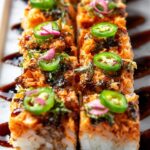
Salmon Sushi Bake Recipe
- Prep Time: 30 minutes
- Cook Time: 25 minutes
- Total Time: 55 minutes
- Yield: 12 pieces 1x
- Category: Main Course
- Method: Baking
- Cuisine: Japanese-American Fusion
- Diet: Low Lactose
Description
This Salmon Sushi Bake is a delicious and unique twist on classic sushi, featuring layers of sticky sushi rice, nori seaweed, cream cheese, and flavorful baked sockeye salmon mixed with spicy sriracha mayonnaise. Baked together until set and topped with furikake seasoning and eel sauce, it makes a crowd-pleasing appetizer or main dish perfect for sushi lovers seeking a warm, comforting option.
Ingredients
Salmon Layer
- 1 ½ - 2 pounds wild sockeye salmon filet
- 2 tablespoons soy sauce
- 16 ounces cream cheese (softened to room temperature)
- ½ cup sriracha mayonnaise
- ½ cup chopped green onions
- 3 tablespoons eel sauce (or oyster sauce)
- 1-2 tablespoons furikake rice seasoning
Rice Layer
- 32 ounces ready-made cooked sticky rice (or 3 cups dried sushi rice, cooked according to package)
- 2 tablespoons rice vinegar
- 2-3 nori sheets
Optional Garnishes
- Thinly sliced radish
- Thinly sliced cucumbers
- Thinly sliced jalapeno
- Thinly sliced avocado
- Pickled ginger
Instructions
- Preheat and Prepare Salmon: Preheat the oven to 400°F. Line a large rimmed baking sheet with parchment paper. Place the salmon fillet on the parchment and drizzle 2 tablespoons soy sauce over the top. Bake for 15 minutes until cooked through, then remove and cool.
- Prepare Rice Base: Spray a 9 x 13-inch baking dish with nonstick cooking spray. Place the cooked sticky rice into the dish, drizzle with 2 tablespoons rice vinegar, and toss by hand to combine. Press the rice firmly into an even layer at the bottom of the dish.
- Layer Nori and Cream Cheese: Cover the rice evenly with the nori sheets, trimming as necessary to fit. Gently spread the softened cream cheese over the nori using a flat frosting spreader, creating an even layer.
- Mix Salmon Topping: Remove the skin from the cooled salmon and crumble the flesh into a mixing bowl. Add the sriracha mayonnaise and mix well until combined.
- Assemble and Bake: Spread the salmon mixture evenly over the cream cheese layer. Bake the assembled sushi bake at 400°F for an additional 10 to 15 minutes until the salmon layer is set.
- Cool and Garnish: Remove from the oven and allow to cool for at least 10 minutes (or refrigerate until cold). Cut into 12 to 24 pieces. Sprinkle each piece with furikake rice seasoning, drizzle with eel sauce, and top with chopped green onions and optional fresh garnishes such as radish, cucumber, jalapeno, and avocado as desired.
Notes
- Use wild sockeye salmon for the best flavor and texture, but other salmon fillets can be substituted.
- For cream cheese, allowing it to soften to room temperature ensures easier spreading.
- Sriracha mayonnaise can be made by mixing mayonnaise with sriracha chili sauce to taste.
- If you don’t have eel sauce, oyster sauce is a suitable substitute or drizzle with soy sauce for a lighter option.
- Pressing the rice firmly into the baking dish prevents it from falling apart when slicing.
- This dish can be made ahead of time and refrigerated; serve cold or reheat briefly in the oven before serving.
- Adjust the amount of sriracha mayonnaise depending on preferred spice level.
Nutrition
- Serving Size: 1 piece
- Calories: 325 kcal
- Sugar: 2 g
- Sodium: 511 mg
- Fat: 17 g
- Saturated Fat: 5 g
- Unsaturated Fat: 10 g
- Trans Fat: 0.02 g
- Carbohydrates: 26 g
- Fiber: 0.2 g
- Protein: 17 g
- Cholesterol: 56 mg

Leave a Reply